Aloe vera is one of the most popular “do-it-all” plants in wellness and beauty. You’ll find it in moisturizers, after-sun gels, shampoos, face masks, and even drinks. But what does aloe vera actually do—and what’s marketing?
This guide breaks down aloe vera’s best-known benefits for good health and cosmetics, the most effective ways to use it, and important safety notes so you can get results without irritation.
What Is Aloe Vera?
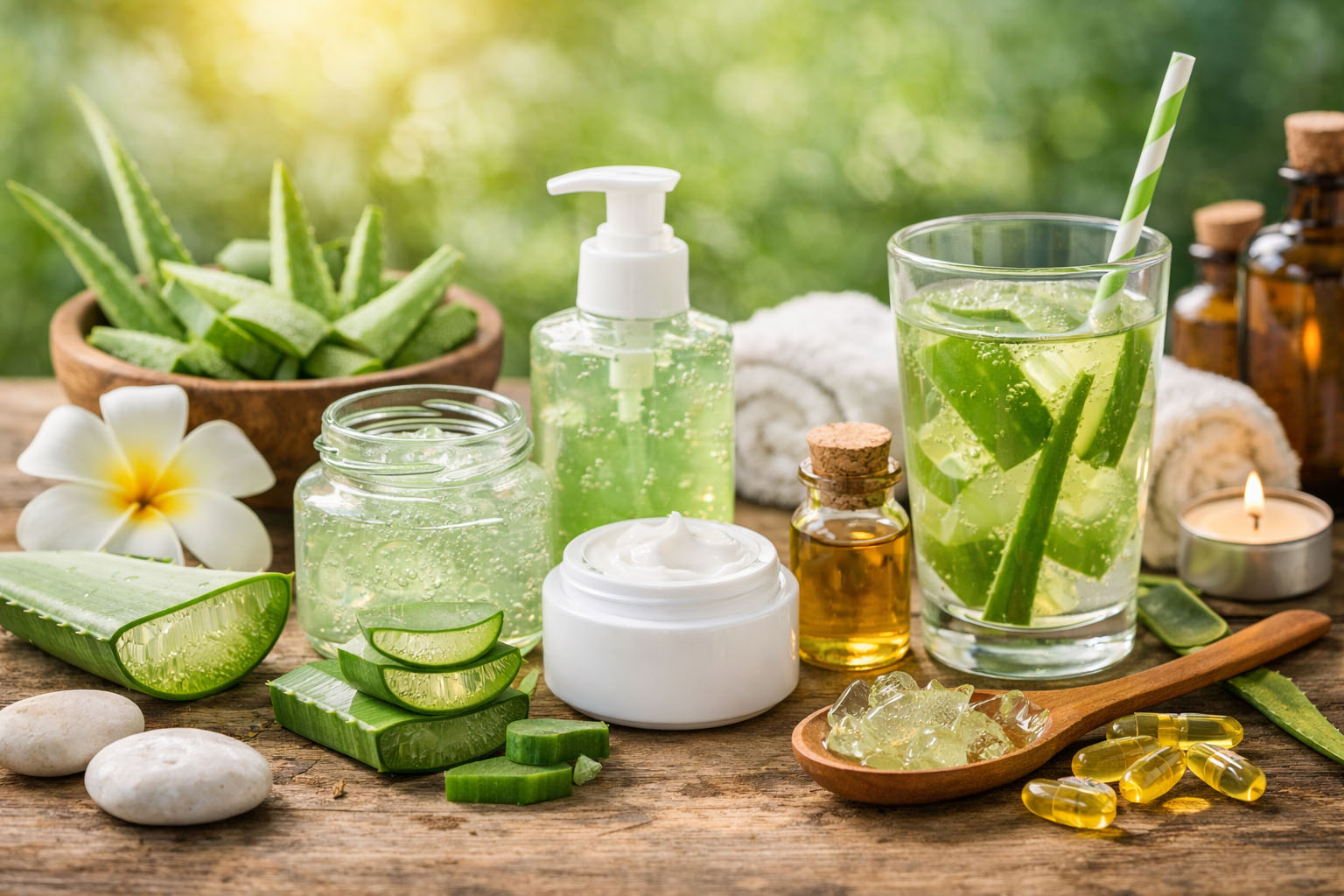
Aloe vera (often Aloe barbadensis miller) is a succulent plant whose thick leaves contain:
- Clear inner gel (commonly used on skin and in cosmetics)
- Yellow latex layer (a bitter sap near the leaf skin; this is not the same as gel and has different effects)
Most skincare products use the inner gel, which is mostly water but also contains compounds like polysaccharides, vitamins, enzymes, and soothing plant chemicals.
Aloe Vera for Skin: The Most Popular Cosmetic Benefits
1) Deep Hydration Without Heavy Oiliness
Aloe gel feels light, absorbs quickly, and can reduce the “tight” feeling of dry skin. It’s often used in:
- Gel moisturizers
- Primers
- Body lotions for summer or oily skin types
Best for: oily/combination skin, dehydrated skin, humid climates.
2) Soothing Sunburn and Mild Burns
Aloe is famous for after-sun care because it can feel cooling and calming.
How to use:
- Apply a thin layer of pure aloe gel 2–3 times per day.
- Store gel in the fridge for extra cooling.
Tip: Aloe helps with comfort, but it doesn’t replace sun protection—always use SPF.
3) Calming Redness and Irritation
Many people use aloe to reduce visible redness after:
- Shaving/waxing
- Wind exposure
- Dryness-related irritation
Sensitive skin note: some people react to aloe. Always patch test.
4) Acne Support (Gentle, Not a Miracle Cure)
Aloe may help acne mainly by:
- soothing inflamed skin
- supporting the skin barrier
- pairing well with acne actives that can be drying
Works well with: niacinamide, salicylic acid, benzoyl peroxide (as a calming layer afterward).
Avoid: mixing aloe with too many DIY acids/lemon/harsh ingredients (increases irritation risk).
5) Helping the Skin Barrier Feel Stronger
When skin is over-exfoliated or stressed, aloe can be used as a simple, calming layer to support comfort while you reduce active ingredients.
Aloe Vera for Hair and Scalp: Why It’s in Shampoos
1) Scalp Comfort and “Fresh” Feel
Aloe is often used for itchy or dry-feeling scalps because it can be soothing and lightweight.
2) Shine and Frizz Control
As a gel, aloe can smooth the hair cuticle and reduce the look of frizz—especially when used sparingly.
3) Dandruff: Helpful for Comfort, Not Always the Root Cause
If dandruff is caused by yeast/dermatitis, aloe may calm irritation but might not solve it alone. Many people combine it with an anti-dandruff shampoo.
Simple method (pre-wash):
- Apply aloe gel to scalp for 10–20 minutes
- Shampoo as normal
Aloe Vera and “Good Health”: What People Use It For
Aloe is sold as drinks/juices and supplements, often marketed for digestion and “detox.” Here’s the realistic view:
Aloe Gel vs Aloe Latex Matters
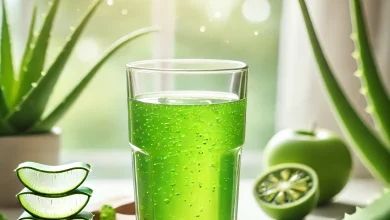
- Inner gel (decolorized/purified in commercial drinks): sometimes used for digestive comfort.
- Latex (yellow sap): contains strong laxative compounds and can cause cramps/diarrhea; not recommended for routine use.
Digestion & Gut Comfort
Some people report improved digestion, but results vary a lot by product quality and dose.
Important: If you have ongoing gut symptoms, don’t self-treat long-term—check for causes like food intolerance, reflux, IBS, or medication effects.
How to Choose a Good Aloe Vera Gel (So It Actually Works)
Look for these on labels:
- High aloe content (often listed as Aloe Barbadensis Leaf Juice)
- Minimal fragrance and alcohol (these can sting)
- No added colorants for sensitive skin
- If it’s a “soothing gel,” check it’s not mostly water + perfume.
Patch test always: inner arm for 24 hours.
The Best Ways to Use Aloe Vera in a Skincare Routine
For daily hydration (simple)
- Cleanser
- Aloe gel (thin layer)
- Moisturizer (optional if you’re oily)
- SPF in the morning
For irritated skin days (“reset routine”)
- Gentle cleanser
- Aloe gel
- Basic fragrance-free moisturizer
(avoid acids, retinoids for 24–48h)
As a face mask (fast)
- Apply a thicker layer for 10 minutes
- Rinse or tissue off excess
- Finish with moisturizer
DIY Aloe Vera: Can You Use Fresh Plant Gel?
Yes, but with caution:
- Use only the clear inner gel
- Avoid the yellow latex (it can irritate skin and stain)
- Fresh gel spoils quickly—store in the fridge and use within a few days
Safer option: a reputable bottled gel with fewer contaminants.
Side Effects and Who Should Be Careful
Aloe is not risk-free.
Topical (skin) risks
- stinging, redness, rash (especially with fragranced gels)
- allergy (more likely if you’re sensitive to plants like garlic/onion/tulips)
Oral (drinking/supplements) risks
- cramping/diarrhea (especially from latex)
- interactions with some medications (possible)
- not recommended during pregnancy unless medically advised
If you have eczema, very sensitive skin, or take regular medication, choose gentle products and speak to a professional before using aloe internally.
FAQ: Aloe Vera for Health & Cosmetics
Is aloe vera good for acne?
It can help calm inflammation and dryness, but it won’t replace proven acne treatments on its own.
Can aloe vera replace moisturizer?
For oily skin in summer, sometimes yes. For dry skin, aloe works best under a moisturizer.
Is aloe vera good for sunburn?
It can soothe and cool mild sunburn, but severe burns/blistering need medical advice.
Can I use aloe vera every day on my face?
Many people can, but patch test first—daily use can still irritate some skin types.
Final Takeaway
Aloe vera is best seen as a soothing, lightweight hydrator that can improve comfort, reduce the feeling of irritation, and support a simple skincare routine. For health uses, the key is knowing the difference between gel and latex and being cautious with oral products.
If you want, tell me your skin type (oily/dry/sensitive) and your goal (acne, redness, hydration, hair/scalp), and I’ll write a personal aloe routine for morning and night.